


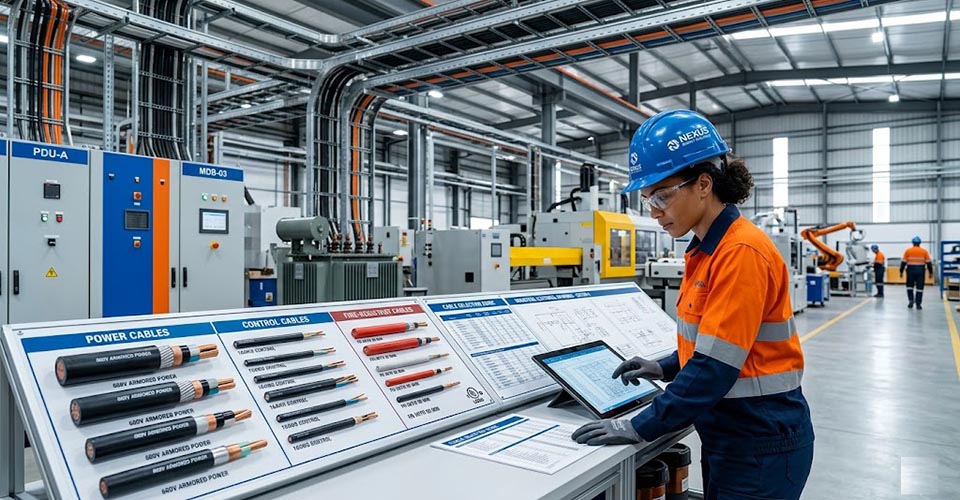
Industrial operations rely heavily on safe and efficient electrical systems. Whether you’re managing a manufacturing plant, power facility, construction project, or processing unit, selecting the right electrical cable is crucial for ensuring operational reliability, equipment safety, and long-term performance.
With numerous cable types available in the market, choosing the most suitable option can be challenging. Understanding key technical factors and application requirements can help businesses make informed decisions and avoid costly downtime.
Understand Your Application Requirements
The first step in cable selection is identifying where and how the cable will be used. Different industrial environments have varying requirements based on voltage levels, load capacity, operating temperatures, and exposure to chemicals, moisture, or mechanical stress.
For example, a steel plant may require heavy-duty power cables, while a pharmaceutical facility may need specialized low-smoke and fire-resistant cables for enhanced safety.
Consider Voltage and Load Capacity
Electrical cables must be capable of handling the required voltage and current load without overheating. Undersized cables can lead to energy losses, voltage drops, equipment damage, and potential safety hazards.
Always calculate the expected load and choose cables that meet or exceed the operational requirements.
Evaluate Environmental Conditions
Industrial environments often expose cables to harsh conditions such as:
- High temperatures
- Moisture and water exposure
- Chemical contamination
- UV radiation
- Mechanical impact and abrasion
Selecting cables with appropriate insulation and protective sheathing ensures durability and long service life.
Choose the Right Cable Type
Different industrial applications require specific cable types:
Power Cables
Ideal for transmitting electrical power in industrial and infrastructure projects.
Control & Instrumentation Cables
Used for monitoring, automation, and process control systems.
FR & FRLS Cables
Provide enhanced fire safety by reducing flame propagation and smoke emission.
Solar DC Cables
Designed for solar power installations with UV-resistant and weatherproof properties.
Fire Survival Cables
Maintain circuit integrity during fire emergencies, supporting critical safety systems.
Prioritize Safety Standards
Always choose cables that comply with relevant Indian and international quality standards. Certified cables provide better performance, reliability, and protection against electrical failures.
Using genuine products from trusted manufacturers like Polycab ensures consistent quality and peace of mind.
Consider Future Expansion
Industrial facilities often expand over time. Selecting cables with adequate capacity for future requirements can reduce replacement costs and simplify system upgrades.
Work with a Trusted Supplier
Choosing the right supplier is just as important as selecting the right cable. An experienced distributor can provide technical guidance, product recommendations, datasheets, and support throughout the procurement process.
At Tegh Cables (INDIA) Private Limited, we offer a comprehensive range of genuine Polycab cables and wires for industrial, commercial, and infrastructure applications. Our experienced team helps customers identify the most suitable cable solutions based on their specific project requirements.
Conclusion
Selecting the right electrical cable is essential for maintaining safety, efficiency, and operational continuity in industrial environments. By considering factors such as application type, load requirements, environmental conditions, and safety standards, businesses can make informed decisions that deliver long-term value.
For expert guidance and genuine Polycab products, partner with Tegh Cables (INDIA) Private Limited—your trusted source for reliable electrical solutions across India.
